Payment Flow
When I joined Prodamus.Pay team, the first version of the product was already live. The team was ready to evolve — to refine the UX, refresh the visuals, and make the payment flow more flexible for new business needs. I led the redesign of the payment experience, focusing on clarity, conversion, and user trust.
Together with the product and development teams, we created a more intuitive, scalable flow that set a new visual standard for the platform.
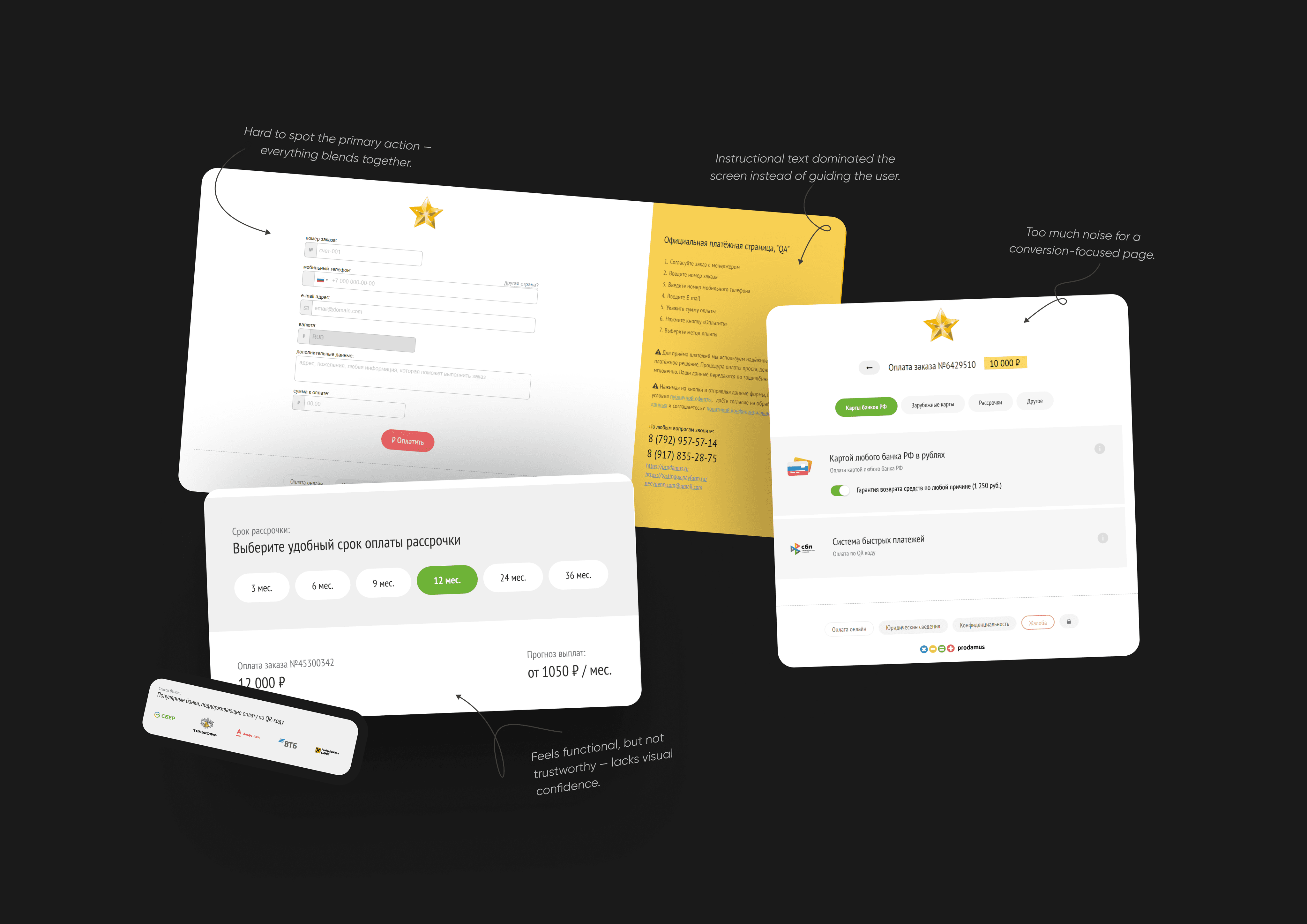
The original payment page was functional but visually outdated and not optimized for modern payment scenarios:
Problem & Goal
✦ Outdated flow. The first version of the payment page worked fine
for simple use cases but wasn’t ready to scale with new payment methods.
✦ Inconsistent experience. Different payment types followed separate logic, creating confusion and friction for users.
✦ Low visual clarity. The layout lacked hierarchy and didn’t build enough trust — essential for a product handling money.
Goal: redesign the flow to make payments faster, clearer, and more reliable — while setting the visual and UX foundation for the platform’s next stage of growth.
Research & Insights
We started with user interviews — talking to real buyers from our merchants’ stores.
This helped identify where users hesitated, what caused drop-offs, and how they perceived trust during payment.
Together with analysts and the system architect, I mapped all user scenarios and technical dependencies — from form states to backend confirmations. Some sessions also included the security officer, to align UX decisions with compliance requirements.
Component Work & Visual System
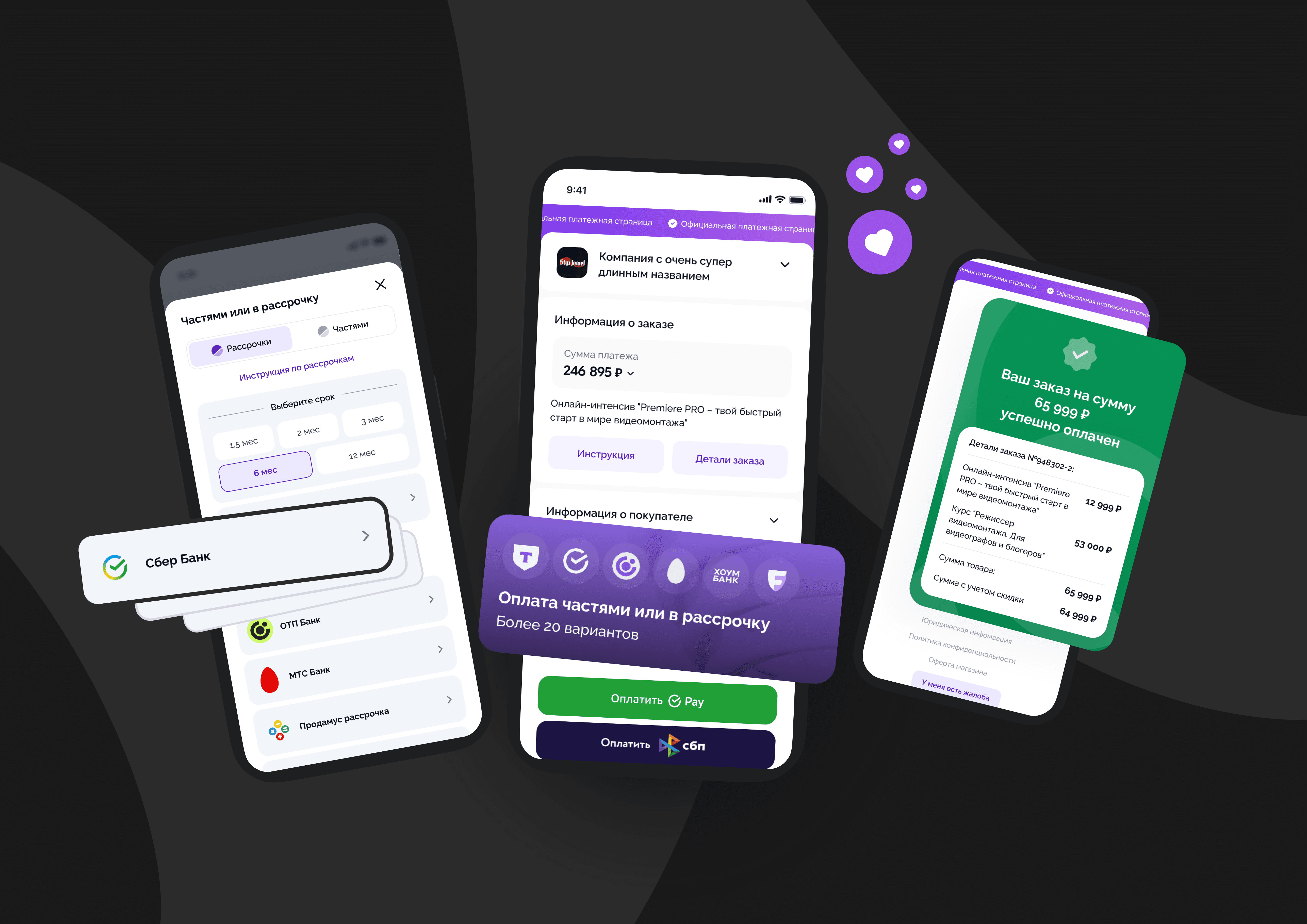
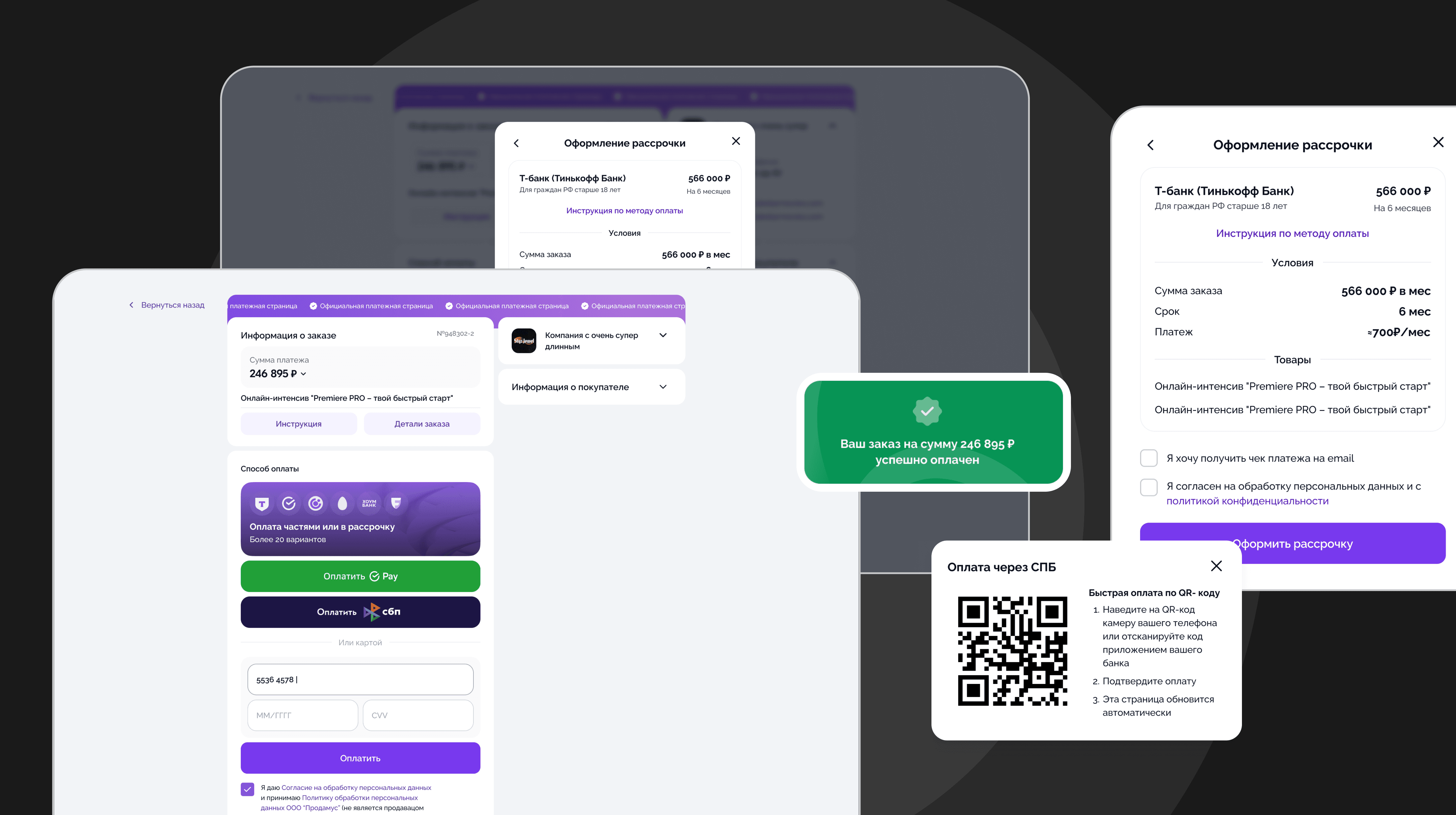
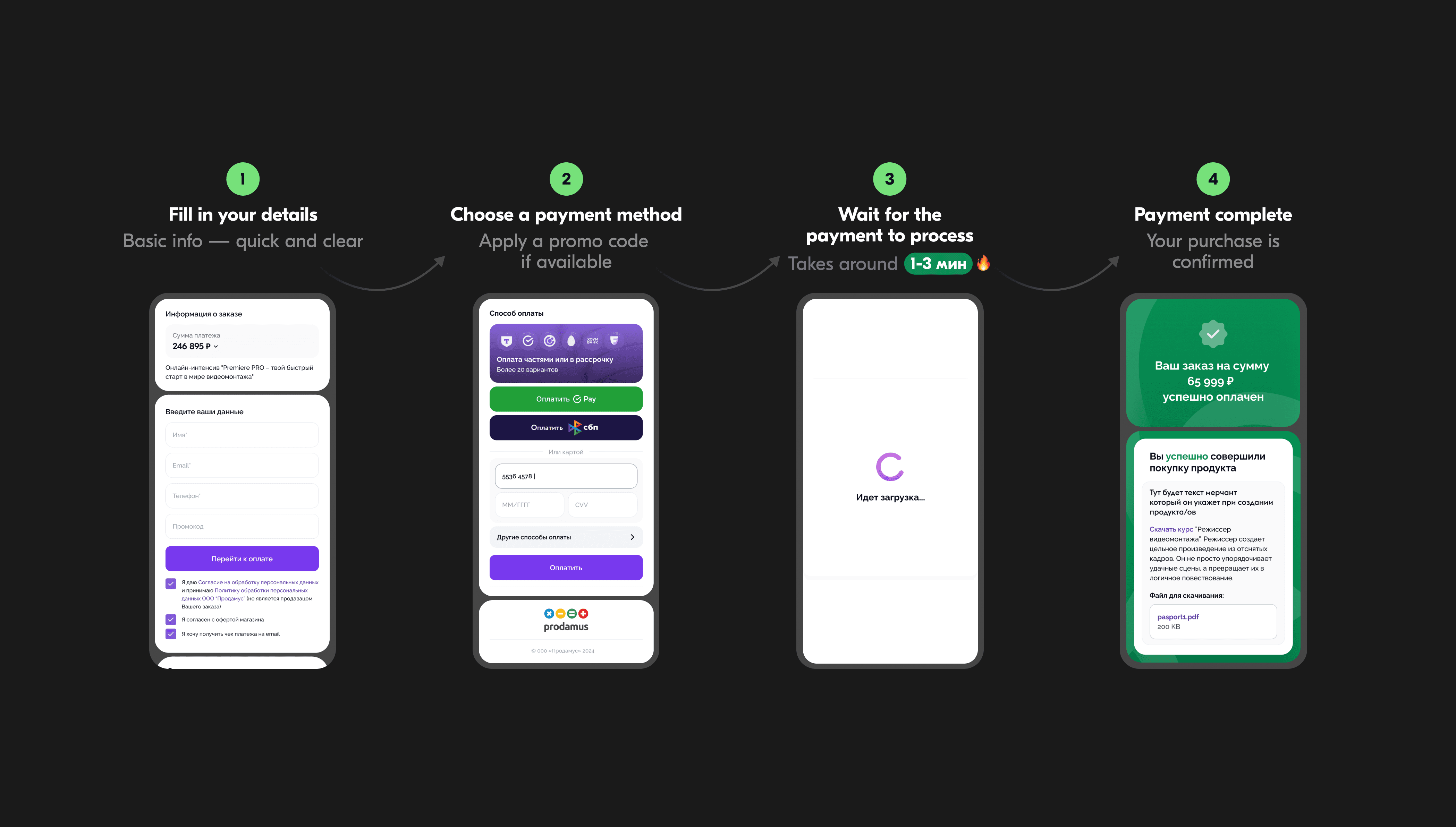
Based on our findings, I focused on simplifying the payment structure: removing unnecessary steps, adding inline validation, and improving feedback for success and error states.
The flow became shorter, more predictable, and visually cleaner.
Redesign & Simplification
To ensure scalability, I created a set of reusable UI components — buttons, input fields, states, and notifications. This not only streamlined development but also unified the look and behavior across the platform.
Outcome
The updated flow made payments feel natural — one motion, one confirmation, done.
Merchants stopped getting “Did my payment go through?” messages, and internal analytics showed fewer failed or repeated payment attempts.
It’s still the foundation for new payment features added later on.